

Research Article15 December 2026
Featured Content
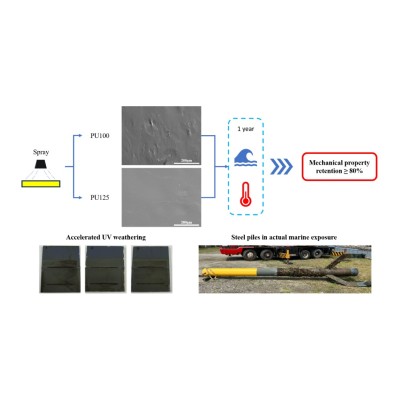 15 September 2026Yu-Chang Lin, Yen-Fu Liu, I-Ming Pan, Ming-Yuan Lin, Kang-Yu Liao, Hung-Hua Sheu, Hung-Bin Lee
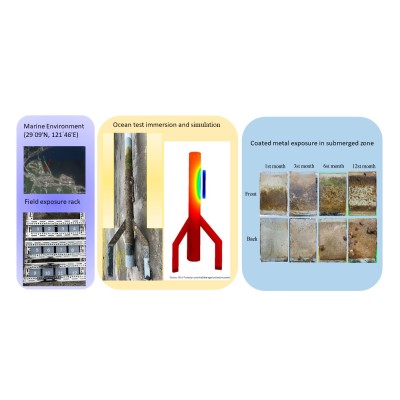 15 September 2026Yao-Hung Fan, Yen-Fu Liu, I-Ming Pan, Chih-Chung Wen, Hsiu-Chen Yeh, Chien-Ming Lo, Tai-Liang Kuo, Hung-Hua Sheu, Hung-Bin Lee
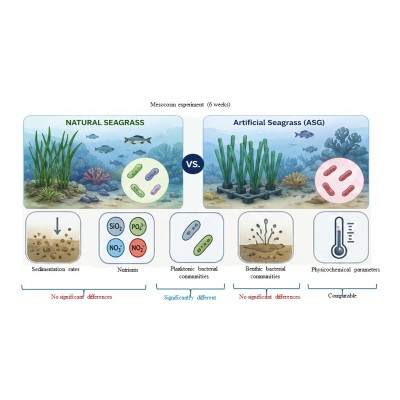 Research Article15 September 2026Hewa Pathirannahelage Athri Thathsarani Weerakoon, Jimmy Kuo, Pi-Jen Liu, Kwee Siong Tew
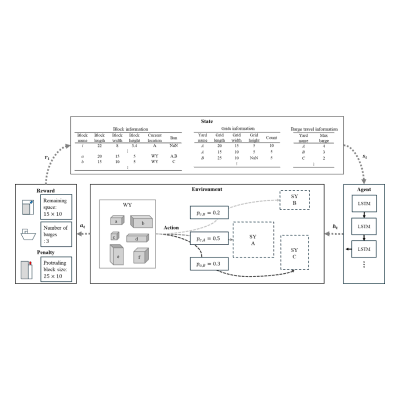 Special Issue Article15 September 2026Gawon Lee, Jaehyeon Heo, Misung Kim, Hyerim Bae
Current Articles
- Research Article15 December 2026
SAR Ship Detection Based on Shallow Feature Guidance
Chenxu Xia, Peng Chen, Ya Zhang, Ying LiMaritime ship detection is of great significance for both military security and civilian applications. Synthetic Aperture Radar (SAR), with its all-weather and all-day imaging capability, plays a vital role in maritime surveillance. Nevertheless, SAR ship targets typically appear small in scale, embedded in complex backgrounds, blurred at boundaries, and easily confused with near-shore features, which pose substantial challenges for accurate detection. To address these issues, we propose a SAR ship detection network that integrates dual enhancements of small-object representation and edge information. The network introduces two key components: the Small Target Refine Pyramid (STRP) to strengthen shallow feature representation for small targets, and the Edge Information Enhancement and Propagation Mechanism (EIEP) to refine and transmit boundary cues. Additionally, a customized bounding box regression loss, Focaler-MPDIoU, is designed to improve localization accuracy and robustness to complex object morphologies. Experiments on benchmark SAR ship detection datasets (HRSID, SSDD, and LS-SSDD) demonstrate that the proposed method achieves superior performance compared with both classical and state-of-the-art detection models. - Research Article15 December 2026
Enhancing Shipboard Safety Management under the ISM Code: An Innovative Risk Assessment Framework with a Stern Tube Case Study
Pi-Yen LinThe shipboard safety management system (SMS) is designed to enhance safe operations, risk management, and emergency response to improve overall ship safety and efficiency. This paper demonstrates the use of an engine room simulator (ERS) for collecting failure modes and applies it to a comprehensive failure analysis of the stern tube lubricating oil system. A new risk closeness coefficient method was developed, integrating expert background knowledge and weighted risk assessments. The analysis, based on multiple expert evaluations, covered five subsystems, eight main components, 23 failure modes, and 112 failure causes. This study presents 26 recommendations for maritime practitioners and onboard operators to prevent and mitigate risks. A comparative analysis highlights the differences between the AHP-EMM and traditional FMEA methods.
Most Popular Articles
- Research Article15 December 2002Shih-Jen Huang, Gin-Rong Liu, Tsung-Hua Kuo, Tang-Huang Lin, Chih-Kang LiangThe Ocean Color Imager (OCI) onboard the ROCSAT-1 Satellite was employed to demonstrate its capability in monitoring sandstorm events around Mongolia and northwestern China where they have been occurring in great frequency over these past few years. The OCI measures the radiance from the visible to near infrared regions in six spectral channels. The radiance can be used to calculate the aerosol optical depth (AOD) of the atmosphere through an atmospheric correction algorithm. The variation in the AOD during January and February of 2001 is investigated in this study. A set of OCI images covering the Yellow Sea was selected for analysis. The results showed that the AOD values increased significantly after the sandstorms erupted, where its value was almost four times higher than before.
- Research Article15 December 2016Tai-Yi Chu, Jyun-Long Lee, Wen-Cheng HuangThis study evaluated the impact of climate change on the water supply of the Shihmen reservoir in northern Taiwan. Five downscaled general circulation models that represent the daily meteorological data of 2046-2065 were adopted. The future inflow of the Shihmen reservoir was estimated using the tank model. Subsequently, the water supply risk under the given demand and operating conditions was simulated and assessed. Compared with 2004-2011, the average annual precipitation of the Shihmen watershed in 2046-2065 is lower, particularly during the wet season (May-October). Therefore, the risk to the water supply will increase in the first cropping season (from March to June) in the future. To reduce the risk of water shortage caused by public demand, irrigation fallowing during the cropping season is necessary
- 15 October 2018Jen-Chieh Lee, Tony ShayIn this paper, the performance of a 2000-ton hybrid AIP system submarine is investigated by analyzing the weight, volume and efficiency of its propulsion system. The engine of the investigated AIP system employs a low temperature polymer electrolyte membrane fuel cell which makes use of the hydrogen and oxygen as the reactants. More specifically, the reactants of fuel cell in this study are considered from the combination of three fuel storage systems, methanol (MeOH), liquid hydrogen (LH2) and metal hydride (MH2), and two oxidant storage systems, liquid oxygen (LOX) and compressed oxygen (O2). Based on the assumed various daily propulsion load consumptions, a propulsion system of a 3500 kW diesel generator, a 300 kW fuel cell, and a 7500 kWh energy capacity Li-ion battery bank is determined. With the system installed in the submarine, the maximum designed endurance can reach a total of 26 days for the fuel cell using the combination of reactant LH2 + LOX, and the minimum designed endurance can be up to 10 days for using the reactant MH2 + O2. For submarine cruising at zero speed, the submerged endurance of the AIP system using reactant LH2 + LOX plus battery bank is 22.8 times of that using battery bank alone. This value will increase to 25.0 times for submarine cruising at 7.4 knots. At the cruising speed of 5.5 knots, the maximum submerged range of submarine increases a factor of 24.1 for fuel cell using the reactant of LH2 + LOX as compared with operation on battery bank alone. Therefore, the submerged endurance is substantial enhanced for using the combination of fuel cell and battery. In addition, the indiscretion ratio is zero for the AIP system submarine with a cruising speed below 7.1 knots; this can greatly reduce the submarine vulnerability. Based on the weight and volume analysis of the submarine equipped with a hybrid AIP system, the usage of the reactant LH2 + LOX is well suited for a small- to medium-sized 2000-ton submarine with a fuel cell system. Furthermore, using the reactant MeOH + LOX has the advantage for large-sized LT-PEMFC AIP system submarines.
- Research Article15 December 2005Wen-Tung Chang, Chen-Chou Lin, Long-Iong WuIn this paper, Grashof’s theorem is justified from the perspective of the occurrence of stationary configurations and uncertainty configurations of four-link chains. The link length relations at stationary configurations and uncertainty configurations are examined in detail based on the triangle inequality, and then the conditions for the existence of a crank and a change point are deduced.
- 15 April 2016Chun-Ying Wang, Yean-Chang ChenThe content and composition of fucoidan in six brown macroalgae were investigated. The influence of different washing steps and two types of extraction methods on the yield and composition of fucoidan were assessed. The composition of the extract was determined by using a colorimetric method to measure the total sugar, sulfate, and protein contents of the fucoidan. The monosaccharide composition was assessed using high-performance liquid chromatography. The structures of the algal polysaccharide were studied using Fourier transform infrared-attenuated total reflectance spectroscopy. The fucoidan content extracted using method I was 13.13% (of dry weight), 24.00%, and 22.67% from Sargassum glaucescens, Sargassum horneri, and Laminaria japonica, respectively. By contrast, the fucoidan content extracted using method II was 4.20%, 4.80%, and 4.64% from S. glaucescens, S. horneri, and L. japonica, respectively. The samples extracted using method II were lower in total sugar content but higher in sulfated content than those extracted using method I. Using method II yielded the highest fucose content in S. glaucescens (20.89%) and Hizikia fusiformis (15.89%). The proportion of H. fusiformis was lower than that of S. glaucescens because the biomass of the H. fusiformis was much larger in the wild. Therefore, we consider H. fusiformis to be a rich source of fucoidan for human consumption.
- Research Article15 April 2015Ke-Ru Chou, Tzong-Dar Wu, Han-Nien Lin, Tai-Shan Liao, Kwong-Kau TiongA prototype C-band pyramidal horn antenna was fabricated after using High Frequency Structure Simulator (HFSS) software to simulate, analyze, and optimize the design parameters. The pyramidal horn antenna was designed to operate as a key detection component for disaster prevention and warning instruments in the domestic development of water-level radar sensor (WLRS). Experimental measurements showed the horn operating with a bandwidth of ~ 800 MHz from 5.4 GHz to 6.2 GHz with the central frequency at 5.8 GHz. The voltage standing wave ratio (VSWR) in the operating frequency range and the radiation pattern gains were measured to be smaller than 1.2 and larger than 16 dB, respectively. The experimental measurements compared well with the simulated results and met the design requirements.